
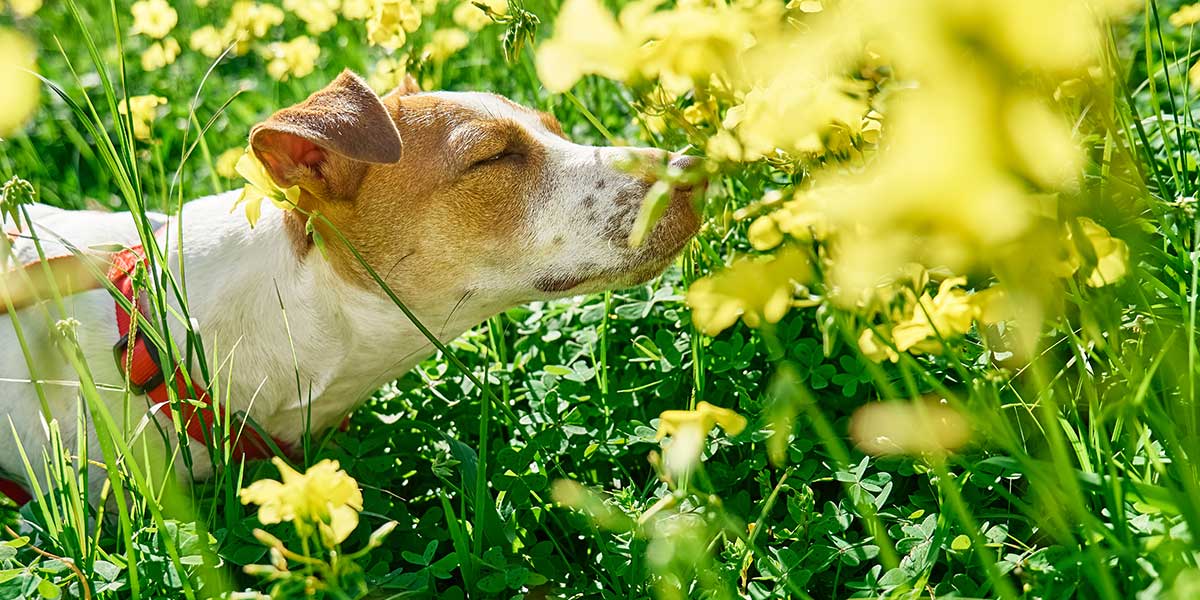
If your dog starts developing new symptoms in the spring, they might be allergic to pollen. Understanding common dog pollen allergy symptoms can help you identify when they might be showing signs of an allergic reaction.
Dogs can develop new allergies at any time, so even if your furry friend has never reacted to pollen before, they may be experiencing allergies that you should bring up with your veterinarian.
Signs and Symptoms of Pollen Allergies in Dogs
Areas like New York that experience all four seasons can see high levels of pollen in the spring. Pollen is a common dog allergen, and pups who are allergic to this substance often showcase more severe symptoms during springtime.
Below are a few signs that your pup might be allergic to pollen.
1. Itching and Scratching
Airborne allergens, such as pollen, can cause intense itching and scratching in pets who are allergic. This happens when a dog’s immune system mistakenly identifies pollen as a threat, triggering an immune response that releases histamines. In turn, your pup can experience itchiness, inflammation, and redness of the skin.
Pollen allergies can also lead to hives in some dogs. They can occur all over a dog’s body, but you may be able to see them more easily on areas with less fur, such as your pup’s belly and armpits. Hives look like raised bumps that may appear pink or red.
2. Watery Eyes
If your dog is allergic to pollen, you might also notice watery eyes or the presence of eye discharge come spring. When the immune system reacts to pollen, it can trigger the production of excess tears to flush out the airborne pollen particles. Your dog’s eyes might also look red, and you may notice them itching or pawing at their eyes.
Pollen can trigger allergic conjunctivitis in some dogs. If these dog pollen allergy symptoms are new for your pup, a vet visit can confirm their allergy diagnosis and rule out other eye conditions.
3. Excessive Licking and Hot Spots
Pollen allergies can cause dogs to feel intensely itchy, and they often lick or bite their skin to relieve the itch. This can lead to the development of hot spots, which are wounds that occur due to excess moisture in an area of the skin. Hot spots can also be uncomfortable, leading to more licking that worsens the wound. Over time, these spots can become infected.
If you notice your dog licking themself more often than usual or beyond basic bathing, they may be experiencing itchiness due to allergies. In some cases, dogs need Elizabethan collars to prevent excessive licking and allow hot spots to heal. Allergy medications can also help your pet feel more comfortable and minimize further licking.
4. Sneezing
Sneezing is another one of the dog pollen allergy symptoms that you might see in the spring. Dogs that are allergic to pollen might sneeze as an immune response to inhaling pollen particles.
You might also notice your dog “reverse sneezing,” which happens when dogs forcefully suck in air through the nose, creating a honking or snorting sound. While reverse sneezing in dogs can seem intense, it is a normal reflex triggered by irritation.
Still, more sneezing than usual indicates that your dog may be experiencing allergies, and a visit to the vet can help you determine how to help them feel more comfortable.
5. New Respiratory Symptoms
Pollen allergies in dogs can trigger both dermal and respiratory symptoms. Your dog might experience any of these respiratory symptoms as an immune response to pollen:
- Runny nose
- Stuffy nose/congestion
- Shortness of breath
- Coughing
- Wheezing
These dog pollen allergy symptoms can also have other causes, so it is important to consult your vet to find the source.
6. Hair Loss
Excessive itching and licking can also lead to hair loss. You might notice bald patches on your dog’s fur or see more fur on the ground than usual. However, keep in mind that the spring months are also peak shedding times for dogs with thick coats, so you may see more hair loss than normal because of this.
7. Head Shaking
Canine pollen allergies can make your furry friend’s ears itchy and uncomfortable as well. You might notice them shaking their head to relieve the itch or in response to this irritation. Head shaking can also have other causes, such as ear mites or ear infections, so you will want to have your vet take a look.
What To Do if You Suspect Your Dog Has Pollen Allergies
Noticing any new symptoms in your dog should warrant a trip to the vet, whether you think they might be showing pollen allergy symptoms or signs of another condition. While allergies may not be as serious as some other health conditions, they can make your dog uncomfortable and lead to problems like hot spots and infections.
Your vet can diagnose pollen allergies by reviewing your dog’s medical history, conducting a physical exam, and discussing their symptoms with you. They can look for other conditions that might rule out allergies, such as fleas, ticks, or ear mites, which can also cause itchiness and skin inflammation.
You can also consider scheduling allergy testing for your dog. A vet would expose your dog to a few common allergens through intradermal skin testing, then examine their skin for signs of reactions.
Dogs with mild pollen allergies can often benefit from antihistamines like Benadryl and Zyrtec. Some dogs might also need supplements or allergy-friendly foods. Always talk to your vet before giving your dog any new medications or changing their diet.
Schedule an Appointment With Hudson Animal Hospital
Are you noticing new dog pollen allergy symptoms? Schedule an appointment with a veterinarian at Hudson Animal Hospital today. We’ll conduct a physical exam and discuss possible causes of these symptoms, such as new allergies or even kennel cough. Then, we’ll create a treatment plan to help your pet get back to their tail-wagging self.
Request your appointment today by calling 212-706-4088.