
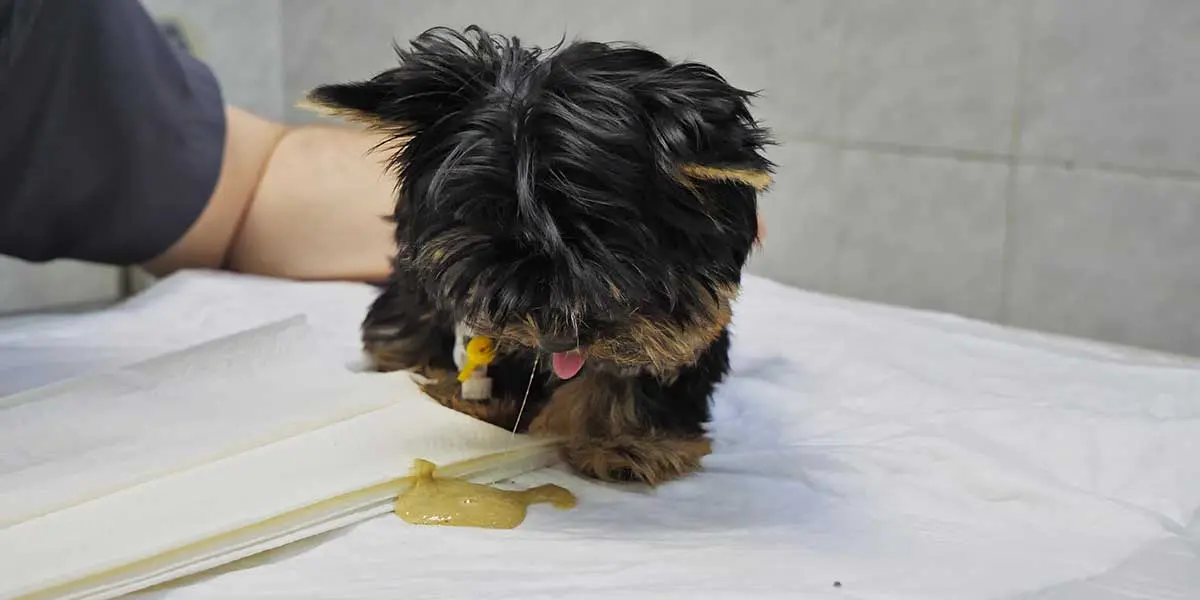
Many pet owners have the same experience: They hear their pooch throwing up, only to discover a puddle of yellow foam instead of last night’s dinner. Even more confusing? Your dog acts perfectly fine, as if nothing happened.
When you find your dog throwing up yellow bile, it’s reasonable to feel concerned and wonder if there’s something wrong. Did your pup eat something strange, or does that bright color mean they have a digestive issue? Several things can cause this, and not all are serious. However, you’ll want to visit a veterinarian in Manhattan to figure out what’s happening.
Why Is Your Dog’s Vomit Yellow?
Bile is a digestive fluid made in the liver and stored in the gallbladder. It normally enters the small intestine to help break down fats. However, when it travels backward into the stomach, it can irritate the lining and trigger vomiting. Vomit may be yellow or yellow-green and often foamy, and there’s rarely any food in it because the stomach is already empty.
The yellow color of the vomit offers a clue that something’s going on to cause bile to go back into the stomach, but it doesn’t explain exactly what’s happening or why. Any dog that vomits regularly needs to see a vet who can assess their appetite, energy, and other symptoms to determine the problem.
Common Causes of Yellow Vomit in Dogs
Some explanations for a dog vomiting yellow are minor, and a few are serious.
Long Gaps Between Meals
The most common reason for dogs to vomit bile stems from an empty stomach. When too much time passes between meals, bile can accumulate, and without food to mix with it, it can irritate the animal’s stomach and make them queasy.
Empty stomach vomiting most often happens after an overnight stretch without eating. It’s also common in dogs that eat only once a day or skip meals. You might notice that in addition to vomiting, they also lick their lips or drool from nausea.
When this happens frequently, your vet may diagnose bilious vomiting syndrome. If your dog turns up their nose at breakfast before vomiting, this might be why. It’s not usually dangerous, but your vet should rule out other causes. The fix for bilious vomiting syndrome in dogs is often surprisingly easy, like feeding them a small meal late in the evening.
They Ate Something They Shouldn’t Have
Dogs are known for being less than discerning when it comes to food, and if they get into the garbage or find something on the street to snack on, it can make them quite ill. Dogs can develop stomach irritation after eating scraps, grass, or nonfood items.
A raid on the trash cans isn’t the only possible cause of your dog throwing up yellow bile. A sudden food switch or unfamiliar treat can also upset digestion. Food sensitivities are another possibility, especially when symptoms keep returning.
Digestive System Problems
Some dog digestive problems involve inflammation, such as gastritis or inflammatory bowel disease. Pancreatitis, which means inflammation of the pancreas, can also cause vomiting and abdominal pain.
Organ Problems
Gallbladder issues and liver disease in dogs can also cause a dog to vomit yellow bile. Kidney problems can also play a role. These issues typically cause poor appetite, low energy, weight loss, and repeated vomiting episodes.
Blockages
If your dog swallows an object, it can cause an intestinal blockage that leads to a dog vomiting yellow bile and other symptoms. This emergency needs immediate medical attention. In addition to making your dog throw up, a blockage can cause weakness and pain, so seek care immediately if you notice these signs.
When Should You Call the Vet?
One episode of your dog throwing up yellow bile when they’re otherwise healthy is generally nothing to worry about, especially if they still eat, drink, and act like themselves. However, if your dog throws up most days or vomits repeatedly, make an appointment.
Contact your veterinarian for a same-day evaluation if your dog:
- Vomits more than once in 24 hours
- Refuses food or water
- Seems unusually tired or weak
- Has diarrhea or blood in vomit
- Has a swollen or painful belly
- Has dry gums or sunken eyes
Severe pain, marked weakness, or a swollen abdomen calls for urgent evaluation. A dog who cannot keep water down also needs prompt help.
Puppies, older dogs, and pets with existing health conditions should receive attention sooner.
Treatment Options for Frequent Dog Vomiting
Before the appointment, jot down when your dog vomits and how long it’s been since their last meal. Also note any changes in appetite, bathroom habits, or energy. Mention new treats, food changes, and anything questionable they might have swallowed. Even a simple pattern, like vomiting before breakfast but eating normally afterward, can help your veterinarian narrow down the possibilities and choose the next steps.
Dog vomiting treatment depends on the cause. Your veterinarian will review your dog’s history and examine them for signs of pain or dehydration. Your veterinarian may use blood tests, stool testing, or imaging to make a diagnosis.
Some dogs need fluids and medication to control nausea. Others need dietary changes or ongoing treatment for a digestive condition. An obstruction may require surgery.
If meal timing contributes to the problem, your veterinarian may suggest smaller, more frequent meals. Prevention is mostly about routine. Feed at regular times, two or three meals a day for many dogs. Keep the trash locked up, and watch what your pup gets into on walks; dogs and puddles don’t always mix, as the water can contain contaminants and organisms that will make them sick.
Get Help for Your Dog’s Upset Stomach
Cleaning up after a dog throwing up yellow bile is unpleasant. Wondering whether to worry is often worse. The color alone won’t tell you what’s happening, and dogs are also experts at hiding that they feel lousy, so a quiet, picky dog can be sicker than they look. The only way to know for sure is to see the doctor.
Call Hudson Animal Hospital at (212) 706-4088 to discuss your dog’s symptoms and schedule an evaluation.