
When the weather gets warm, it’s natural to want to open the windows and let some air in. But if you share your Upper West Side digs with a feline friend, you need to be aware of high-rise syndrome, a risk that could cause serious injuries to your furry best friend.
High-rise syndrome in cats is the term vets use for injuries that happen when a cat falls from a height; for example, a window, fire escape, balcony, or terrace ledge. Vets in Manhattan see these injuries more often in the spring and summer when people open their windows, so life enrichment can give curious indoor cats safer ways to explore and stay active. It only takes a second for a curious cat to have an accident when a window screen gives way or to lose their footing on a narrow fire escape, and suddenly, they have broken bones or other injuries that need immediate medical attention.
Cats Don’t Always Land on Their Feet
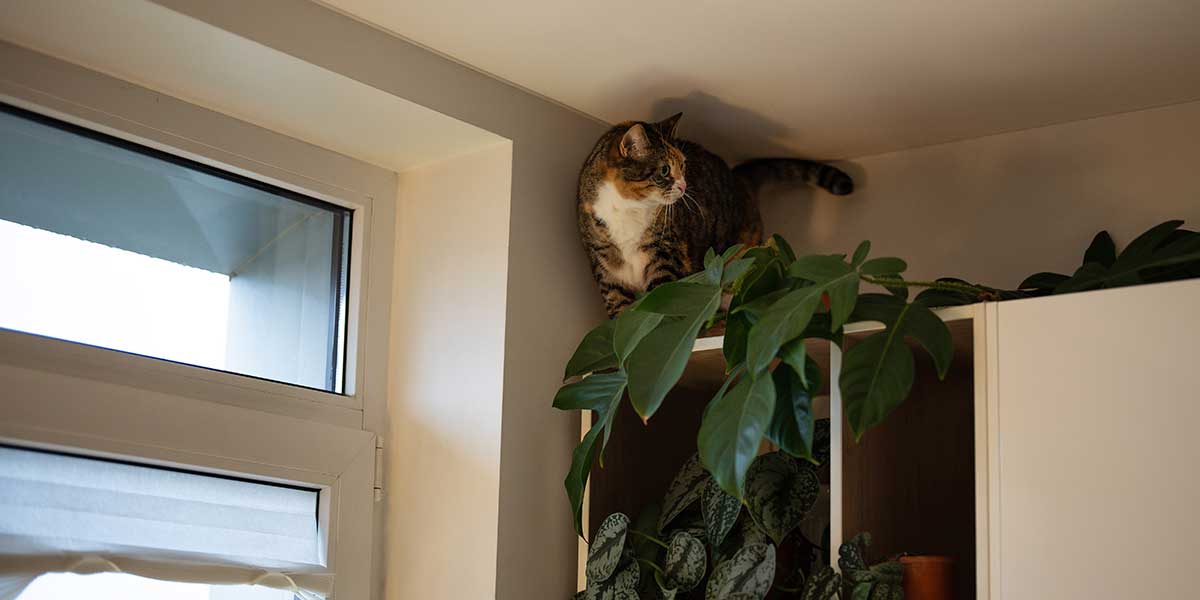
If you have a cat, you know that most love to be up high. Cats like high places that let them observe their surroundings and feel secure. Unfortunately, even cautious cats are also easily distractible, and that natural curiosity can lead to a dangerous fall.
Many pet owners are surprised to learn about high-rise syndrome in cats because they assume that cats always land on their feet when they jump or fall from something. Although cats have an incredible righting reflex that helps them rotate in midair and land upright, that doesn’t mean they always escape injury.
Landing on all four paws after jumping from the top of a shelf is very different from falling from an open window several stories up. Falling from a great height places tremendous force on the animal’s body, which can result in severe trauma that requires immediate veterinary attention.
Common High-Rise Syndrome Injuries
The fall injuries associated with high-rise syndrome in cats can range from mild to life-threatening. Some wounds are obvious, while others remain hidden beneath the surface.
- Fractured limbs that make walking painful or impossible can affect a cat’s mobility, while conditions such as feline joint pain can also make movement uncomfortable.
- Facial fractures and broken jaws
- Chest trauma that can interfere with normal breathing
- Internal injuries and bleeding that may not be visible
- Damage to the lungs, including collapsed lungs
- Bladder injuries from the sudden compression of the abdomen
One of the trickiest parts of high-rise syndrome in cats is that many cats appear surprisingly alert immediately after a fall. Not only are they experts at hiding pain, but adrenaline and shock can temporarily mask it, making owners believe everything is fine.
That false sense of relief is potentially dangerous. Hours later, breathing problems, internal bleeding, or organ damage may suddenly become obvious. That’s why a wait-and-see approach after your cat falls isn’t recommended. Even if they seem to be acting normally, every fall deserves an immediate medical evaluation.
What To Do in the First 15 Minutes
If your cat falls, your response during the first few minutes can affect the outcome. Move calmly and handle your cat as little as possible. Instead of picking your cat up quickly or allowing them to walk around, move slowly and carefully. A frightened cat may struggle, making hidden injuries even worse. Resist the urge to poke around for injuries, since it could worsen a fracture or cause unnecessary pain.
Instead:
- Gently slide your cat into a rigid carrier lined with a soft towel, supporting the body as evenly as you can.
- Keep the carrier level and avoid jostling it during transport.
- Call the clinic so the staff can prepare for a trauma arrival.
- Avoid giving food, water, or medication.
- Head straight to emergency veterinary care
Many owners assume that only very tall buildings are dangerous. In reality, a fall from a second- or third-story window can still cause severe chest trauma or internal injuries. Distance isn’t the only factor that determines severity, and your cat may look completely normal outside even while something serious is happening internally.
Protecting Your Cat in a Manhattan Apartment
Most cases of high-rise syndrome in cats are preventable. Taking a few simple precautions dramatically lowers the risk:
- Install sturdy, locked window guards or true pet-proof screens, because standard window screens can pop out easily under a cat’s weight.
- Never let your pet have unsupervised access to open terraces, balconies, or fire escapes, even “just for a minute.”
- Remember why cats like high places in the first place: They’re drawn to sunny perches where they can see what’s around them, so give them a safe cat tree or windowsill perch instead of allowing them to rest on an open ledge.
How Hudson Animal Hospital Evaluates Trauma Patients
Because high-rise syndrome in cats often involves multiple serious injuries occurring simultaneously, having diagnostic testing and surgical capabilities available under one roof allows treatment to begin without unnecessary delays.
Stabilization is key. Veterinarians focus on keeping the animal comfortable and calm during the initial assessment, then determine which additional tests are necessary.
Digital radiography (DR X-ray) allows the veterinary team to evaluate internal injuries like broken bones and chest trauma. We can perform bloodwork using in-house chemistry and complete blood count (CBC) analyzers to assess organ function and look for signs of blood loss or other complications.
If surgery is necessary to address your pet’s injuries, Hudson Animal Hospital has a fully equipped operating room with specialized warming technology that helps maintain body temperature throughout procedures and recovery. Trauma patients often struggle to regulate body heat, so this equipment supports a safer recovery process.
Fast Action Can Save Your Cat’s Life
No pet owner expects an ordinary afternoon to turn into an emergency. Yet high-rise syndrome in cats remains one of the most preventable accidents seen in urban veterinary medicine.
Hudson Animal Hospital is ready to provide a rapid diagnosis and compassionate treatment for injured cats and common cat illnesses on Manhattan’s Upper West Side. If you suspect high-rise syndrome in cats, seek care immediately rather than waiting for symptoms to worsen. Call (212) 706-4088 if you need help or have additional questions.